
“A Passion for Research Connected Every Step of My Career” — An Indonesian Engineer’s Journey to Developing Satellite Antennas at a Japanese Space Startup
Akbar, an Indonesian engineer who joined Synspective to develop SAR antennas after his tenure at JAXA, tells us at length why he chose Japan and what he values most about working at Synspective.
Sorabatake is launching a new interview series, “Global Talents in Japan’s Space Companies” focusing on foreign professionals working at Japanese space companies. This is the first article in the series.
Today, while Japan’s space industry is rapidly expanding in both the public and private sectors, the shortage of space talent has emerged as a growing challenge. The expansion of the industry is no longer confined within national borders; international competition is intensifying, and at the same time, cross-border collaboration is becoming increasingly important. In this context, many professionals from overseas have chosen to work in Japan and are actively contributing to Japanese companies.
Through “Global Talents,” we want to ask: How does Japan’s space industry — and Japanese companies — appear from the perspective of those who came from abroad? And how does it actually feel to work here? We hope this article will help readers overseas envision, in concrete terms, the option of “working in Japan’s space business.”
For our first guest, we spoke with Prilando Rizki Akbar — born in Indonesia, holding a PhD (Engineering) from Chiba University, with five years of experience at JAXA, and currently developing antenna systems at the SAR satellite startup Synspective.
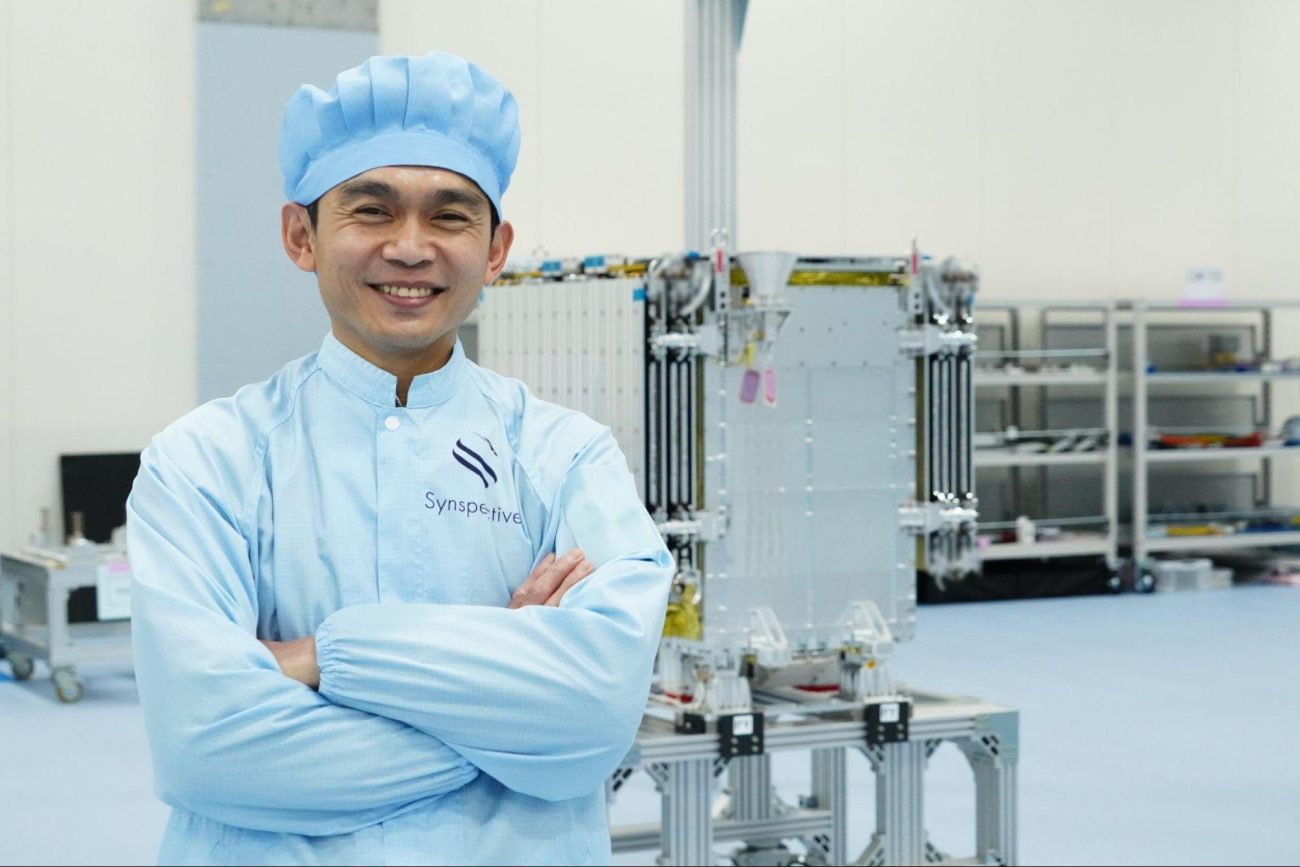
After building his career at one of Indonesia’s largest telecommunications companies, Akbar came to Japan to deepen his research. From his doctoral program to JAXA, then to the Cabinet Office’s national project “ImPACT,” and finally to Synspective — where the antenna technology he led the development of is now installed on the company’s satellites. In this interview, Akbar — who has carved out his career through a single thread, a passion for research — shares the appeal of Japan’s space industry and the reality of working in a multinational team.
Shifting from a Major Telecom Company to Pursue a Doctoral Program: "Japan's Technology Sector Is Constantly Advancing and Fostering Innovation"
SORABATAKE:Thank you for joining us today. To start, could you briefly tell us about your background — from your home country and university major, through to your current career?
Akbar:I’m from Indonesia and graduated from STT Telkom, now known as Telkom University, majoring in electrical engineering. Shortly after graduation, I was recruited by Satelindo, one of the largest telecommunications companies in Indonesia, which was later acquired by Indosat — another major telecommunications company in my country.
SORABATAKE:After starting your career in Indonesia, how did you come to move to Japan?
Akbar:After gaining professional experience in the industry, I decided to pursue further study in Japan and enrolled in a master’s program, eventually continuing on to a doctoral degree in information science, with a particular focus on remote sensing, at the Graduate School of Advanced Integration Science, Chiba University .
I chose Japan because, at that time, Japan had long been recognized as one of the leading countries in the space sector in the world. While I was working in Indonesia, I followed news about Japanese satellite launches, and I was impressed by the scale and consistency of those efforts. It made me realize how strongly research and technological development were supported and prioritized. I found it inspiring that such long-term investment was dedicated to advancing space science and innovation.
SORABATAKE:Given that you had already established a career at Indosat, moving to graduate school in Japan must have been a significant decision.
Akbar:At that time, I faced an important decision. The company policy did not allow employees to take leave for more than two years, which meant I had to choose between returning to Indonesia and resuming my corporate career, or remaining in Japan to complete my PhD.
Then, realizing how much I enjoyed research and the process of developing new knowledge, I made the difficult decision to resign and fully commit to my doctoral studies.
SORABATAKE:So your “passion for research” outweighed a stable career. Could you tell us about how you came to join Synspective?
Akbar:After completing my PhD, I was fortunate enough to join the Japan Aerospace Exploration Agency (JAXA), where I worked for five years. After that, I spent one year at Keio University before moving on to my current position at Synspective.
SORABATAKE:You also have experience working at JAXA. Looking back, out of many possible countries and options, what was the main reason you chose to work in Japan?
Akbar:Japan’s technology sector is constantly advancing and fostering innovation. After completing my graduate studies, I became deeply engaged in my research field and wanted to continue developing my work further.
I was also very fortunate to meet senior Japanese colleagues who generously shared their expertise and guided me along the way. Their mentorship and the collaborative research culture encouraged me to pursue a long-term career in Japan and to continue contributing to technology development in this dynamic environment.
Why I Chose to Stay in Japan and Join Synspective: "Researchers in Space Often Reunite Across Projects and Institutions"
SORABATAKE:Before deciding to stay in Japan, did you also consider other countries or companies as options?
Akbar:Yes, I considered other possibilities. However, I wanted to continue the research and technological development I had begun during my graduate studies and previous work. The space industry community is quite specialized, and researchers often encounter one another again across different projects and institutions.
Remaining in Japan allowed me to continue cooperating with colleagues with whom I had already established strong professional relationships. This continuity fostered trust, efficiency, and shared understanding — which made it a natural choice for further developing my work in Japan.
SORABATAKE:So the relationships you had built up became a major factor in your next career decision. Among many Japanese space companies, why were you attracted to Synspective in particular?
Akbar:When I was at JAXA and Keio University, I was involved in the ImPACT Program, a research project led by the Cabinet Office of Japan. In that project, I was assigned to lead the development of an antenna system. That antenna system is currently used in Synspective’s small satellites.
So joining Synspective allowed me to contribute immediately while continuing to build on the expertise I had developed in my earlier project.
Furthermore, Synspective is one of the leading space industry startups, committed to developing advanced technologies to better understand the Earth from space. Its direction aligned closely with the field of expertise I had been deepening over the years.
Job and Education Opportunities in Indonesia's Space Sector
SORABATAKE:In your home country of Indonesia, how would you describe the availability of jobs and education in the space field?
Akbar:There are some opportunities in Indonesia. On the government side, Indonesia has a national space agency — the Indonesian National Institute of Aeronautics and Space (LAPAN: Lembaga Penerbangan dan Antariksa Nasional) — and there are also a few initiatives in the private sector. However, overall, job opportunities in the space field remain limited. In recent years, hiring has also been affected by broader global geopolitical uncertainties, resulting in a movement of talent from the space sector to other industries.
On the other hand, Indonesia has many leading universities that offer strong programs in space-related technologies, providing students with solid technical training in this field. During my undergraduate studies, I specialized in satellite communications, which later became one of the strong foundations of my professional work. At the time, I didn’t fully realize that the formulas and theoretical principles I learned from textbooks would later become part of my daily responsibilities. Looking back, I’m truly grateful to my professors for equipping me with such valuable knowledge, which has continued to support my career development.
SORABATAKE:So while opportunities to learn specialized knowledge were sufficient in your home country, employment opportunities had room to grow — and against this backdrop, working in Japan became a realistic option. By the way, what was the biggest barrier you faced before starting work in Japan?
Akbar:Finding a position in the space industry as a fresh graduate was quite challenging, as opportunities were relatively limited compared to other engineering sectors.
SORABATAKE:Has this situation changed in recent years? Are career opportunities in the space sector still limited, or have they become broader than before?
Akbar:I think career opportunities in the space sector have become broader than before. We can see that the number of venture businesses has been gradually increasing in Japan. Our company, Synspective, is also now welcoming new members straight from university.
I think career opportunities in the space sector have become broader than before. We can see that the number of venture businesses has been gradually increasing in Japan. Our company, Synspective, is also now welcoming new members straight from university.
On the other hand, throughout my career I have worked in bilingual and international environments, so language and cultural differences have not been my major barriers.
Researchers in this field are accustomed to collaborating across borders, interacting with colleagues of varied backgrounds and accents. There is a strong culture of cooperation driven by a shared curiosity and commitment to advancing knowledge for the benefit of society.
SORABATAKE:”Language and cultural differences were not major barriers” — that may be a characteristic unique to the space industry. Earlier, you mentioned “limited job openings” as the biggest barrier. What do you think would be most effective in addressing that challenge?
Akbar:In a highly specialized field such as space engineering, positions are limited and the required expertise is very specific. To be honest, this is not something that can be resolved at the individual level, as it depends largely on broader industry conditions and market demand.
In my case, the only approach available to me was to continue improving my skills, remain passionate, and stay prepared for opportunities when they appeared. By focusing on strengthening my expertise and maintaining professional relationships, I came to feel that the right opportunity would eventually come.
How Team Lunches and Food Culture Exchange Foster Multinational Team Bonding: "A Workplace Where I Felt Welcomed from the Start"
SORABATAKE:From here, we’d like to ask about your actual experience working at Synspective. To start, could you tell us about what you feel is “really good” about Synspective?
Akbar:Synspective offers a truly welcoming environment for international staff, and this culture begins with the leadership of our CEO, Mr. Arai. He places strong trust in employees and promotes a flexible working style that supports both performance and well-being. His leadership encourages independence, responsibility, and continuous growth, motivating us to become better professionals.
I also deeply respect my Japanese colleagues, who consistently bring a welcoming atmosphere towards international staff. They make genuine efforts to ensure clear communication, mutual understanding, and smooth collaboration across cultural and language differences. Their support has fostered a strong sense of belonging, which in turn motivates us to give back to the company wholeheartedly.
At the same time, international staff also make sincere efforts to understand Japanese working styles and professional manners. This mutual willingness to adapt and learn from one another strengthens trust within the team and creates a balanced, respectful working environment.
SORABATAKE:Could you describe what “international staff feel welcomed” looks like in more concrete terms?
Akbar:In some global workplaces, international staff may feel overlooked, and companies sometimes fail to accommodate different working styles or work-life balance needs. In my experience, Synspective is very attentive in this regard. The company actively cultivates an inclusive and supportive culture, which I believe is essential for long-term organizational growth.
SORABATAKE:Conversely, has anything surprised you, or have you ever felt confused?
Akbar:Honestly, nothing in particular comes to my mind. I believe this reflects the strength of our working environment. As I mentioned earlier, our CEO and colleagues communicate openly and clearly, which helps prevent misunderstandings from becoming a larger issue. Thanks to this culture of transparency and mutual respect, I have not experienced any significant difficulties of note.
SORABATAKE:The fact that you say “nothing comes to mind” itself seems to speak to the transparency of your workplace culture. Is there a memorable episode you can share from working with Japanese colleagues?
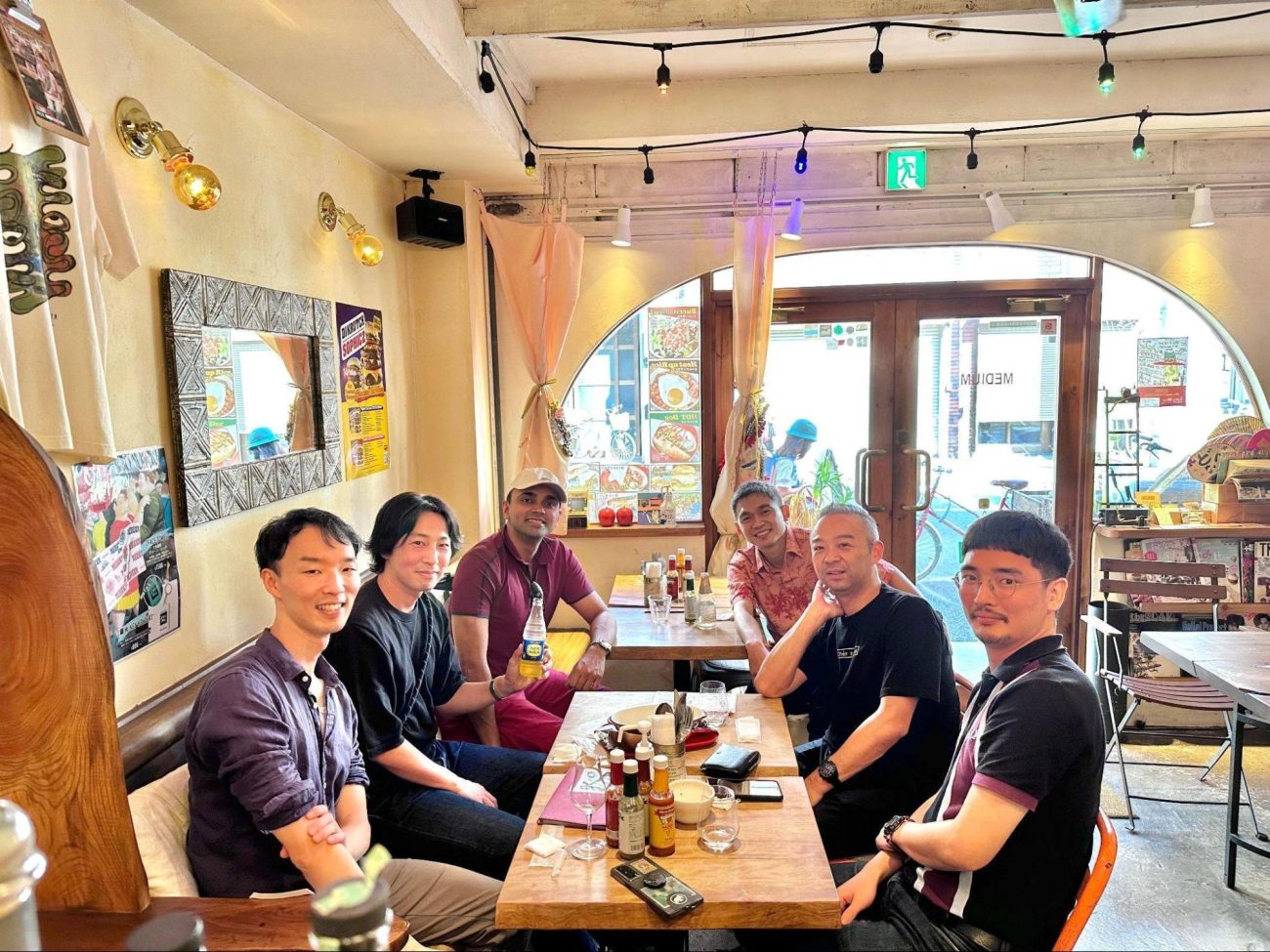
Akbar:In our company we have a program called “Team Lunch,” where once a month all members of a team get to have lunch together. We usually use that moment to introduce typical food from each member’s home country. Through this activity, we are able to deepen our understanding of one another’s culture in the middle of our tight schedule.
SORABATAKE:How does it actually work?
Akbar:For each Team Lunch, we select one person to host on a rotating basis. For example, this month it’s my turn, and next month it’s another member’s. When it’s my turn, I take the team to an Indonesian restaurant, and during the meal other members ask things like, “What is this food made of?” “How do you make this one?” “What is the story behind this food?” — and so on.
SORABATAKE:So you’re talking not just about the food itself, but also about the cultural background of the food.
Akbar:Yes, the cultural background of the food. By talking about the food culture as well, the distance between team members naturally shortens.
SORABATAKE:By the way, do you sometimes talk to your family or friends in Indonesia about your work?
Akbar:In my country, very few people work in the space industry — like making satellites. So when I talk to those who work outside the field, I keep my explanations simple..
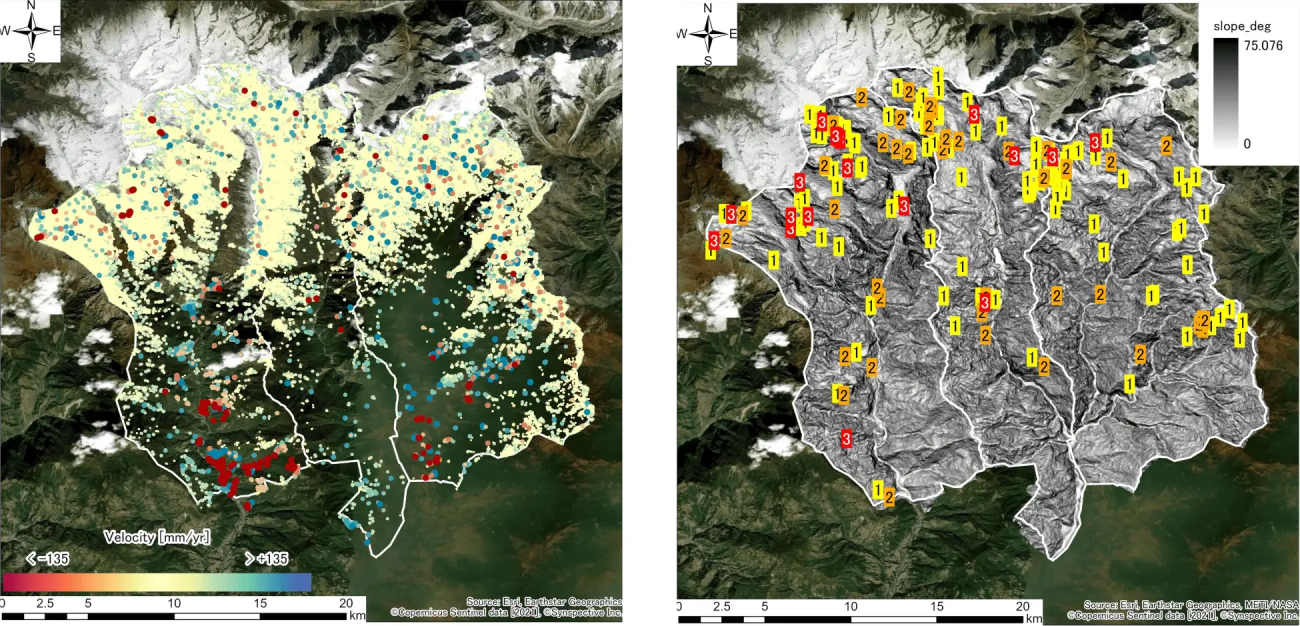
I just mention that I’m working at a satellite company that provides imagery to detect things like landslides or land deformation. They have a simple understanding of that. Strictly speaking, my role isn’t on the side that provides the imagery — I work on building the components of the satellite, in particular the antenna. But I usually don’t go that far in my explanation.
SORABATAKE:”Building the satellite” and “delivering the data” — both are essential parts of the space business. But indeed, explaining the former to a general audience may be a higher hurdle.
The Reward of Developing Next-Generation Satellite Antennas at a Startup: Watching Concepts Come to Life as a Business Product
SORABATAKE:From here, we’d like to dig a bit deeper into the technical side of your current work at Synspective. What kind of technology development are you working on now?
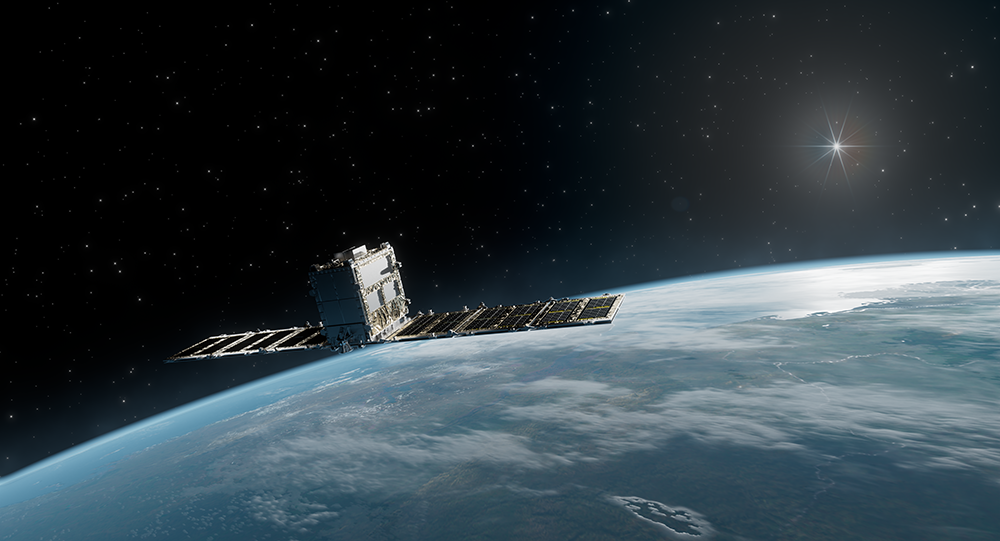
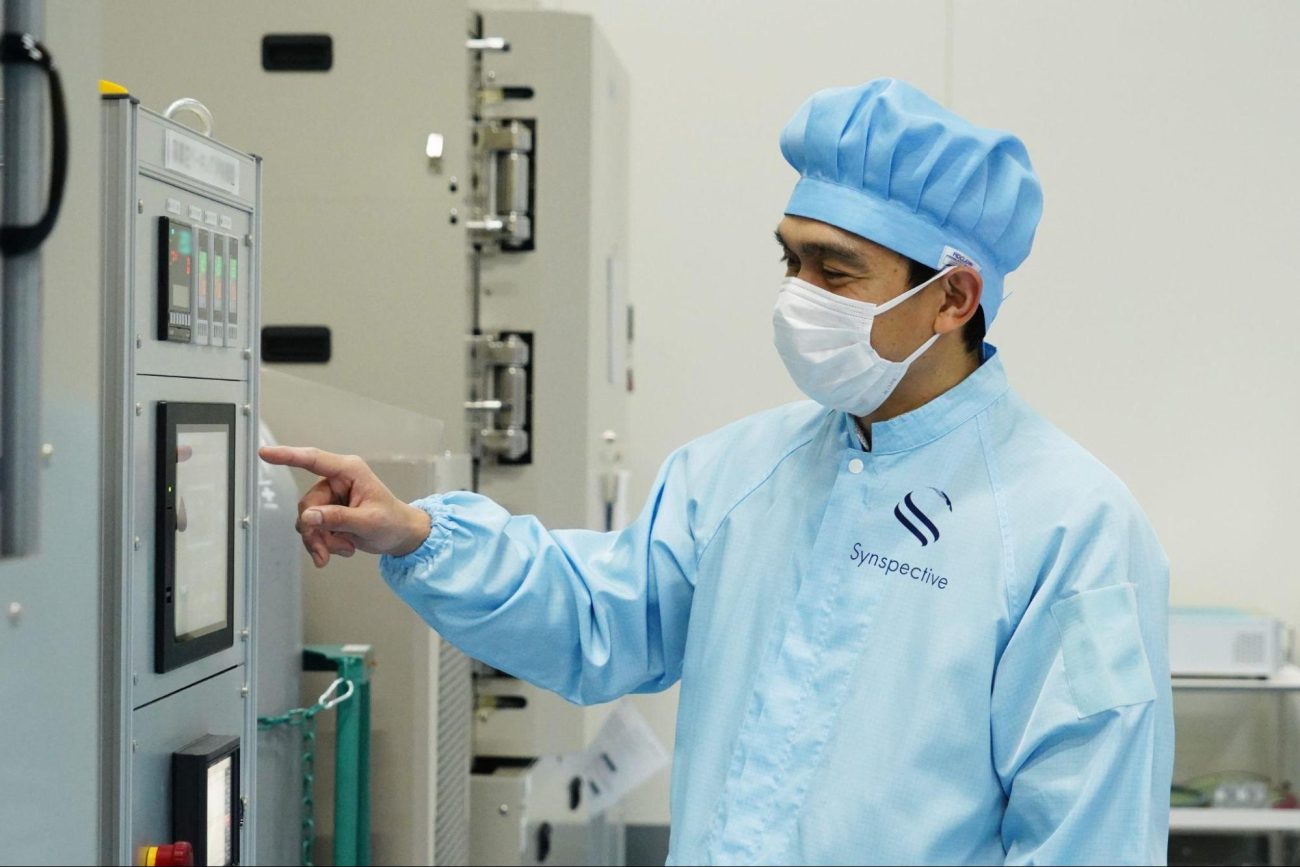
Akbar:The antenna currently installed on our satellite — the StriX — is what we call the third-generation antenna. Right now, our company has a project for a future system that we internally call the fourth-generation system.
SORABATAKE:Compared to the third generation, what kind of evolution is the fourth generation aiming for?
Akbar:In a word, a more broadband antenna. Looking at the potential market, many competitors are also trying to achieve broader bandwidth (the wider the bandwidth, the higher the range-direction resolution, allowing finer distinction of objects on the ground). Currently, Synspective is working to enhance the capability of its antenna and SAR system in the same direction.
SORABATAKE:What do you find most rewarding about your development work at Synspective?
Akbar:In principle, the nature of the work is similar to research. We need to think more carefully about whether the product fits the market and can compete with other players. What I find rewarding is seeing how our concept ideas can evolve into a market-ready product.
SORABATAKE:So what’s rewarding is seeing concepts grow into market-ready products.
Akbar::Yes. It’s a very tough and fast-changing environment, but the rewards are also significant.

A Message to Foreign Professionals Considering Japan's Space Industry: "With Preparation and Perseverance, Opportunities Will Eventually Come"
SORABATAKE:We’ve heard about your career and your current work. Finally, could you share a message for those overseas who are considering working in Japan’s space industry?
Akbar:Working abroad, especially in the current global economic climate, is not easy. Securing a position anywhere requires preparation, persistence, and resilience.
If you are considering working in Japan, my advice is to focus on continuously improving the skills that align with the industry’s demand — strong technical expertise, adaptability, and a willingness to learn. There may be moments of doubt, and the path might not always be straightforward. Stay committed to your goals.
SORABATAKE:When you say “keep improving your skills,” what kind of areas do you think people should be conscious of? The image of the space industry tends to lean heavily toward science and engineering roles.
Akbar:For roles in space engineering, especially in research and development, having a strong foundation in core technical subjects is essential. Basic knowledge in areas such as electromagnetics, signal processing, mechanical engineering, and system design provides the groundwork for more advanced applications in satellite and space technologies.
At the same time, the space industry is not limited to engineering roles. Space companies also require professionals in data analysis, software development, legal affairs, finance, accounting, and many other areas. So in that sense, there are diverse entry points for people from different backgrounds.
What matters most is whether your expertise aligns with the company’s needs, and whether you share its long-term vision.
Continue strengthening yourself, and never lose your motivation along the way. With preparation and perseverance, opportunities will eventually come.
SORABATAKE:So the door is open not only to engineers, but also to professionals on the business side. Akbar, your own career powerfully illustrates this message. Thank you so much for sharing your story today.
Synspective Job Openings
Synspective is currently hiring for several positions. Please feel free to take a look at their recruitment page.
Editor's Note
What left the strongest impression on us during this interview was the way “a passion for research has shaped Akbar’s entire career.” From his decision to leave a stable position at one of Indonesia’s largest telecom companies to commit to a doctoral program; through Chiba University, JAXA, and the Cabinet Office’s ImPACT Program; and on to Synspective — where the antenna he led the development of is now installed. In Akbar’s own words, “joining Synspective allowed me to contribute immediately while continuing to build on the expertise I had developed in my earlier project” — and through these words, we caught a clear glimpse of that one consistent thread.
Akbar’s comment that he “felt welcomed from the start” also resonated deeply. The food culture exchange at Team Lunches, CEO Mr. Arai’s leadership, and colleagues’ everyday efforts to bridge cultural and language gaps all sustain an environment where international staff can work with peace of mind. This openness and mutual respect may be one of Synspective’s real strengths. We were also struck that the space industry isn’t only for engineers, offering diverse entry points in data analysis, software development, legal affairs, finance, and accounting.
In short, Japan’s space industry is gradually building a workplace culture in which foreign professionals can fully demonstrate their abilities, while opening up diverse entry points beyond engineering roles.
In this series, “Global Talents in Japan’s Space Companies,” we plan to continue introducing foreign professionals working at Japanese space companies. If you are interested in working in Japan’s space industry, or if you would like to nominate a foreign professional from your company for a future feature, please feel free to contact Sorabatake.